
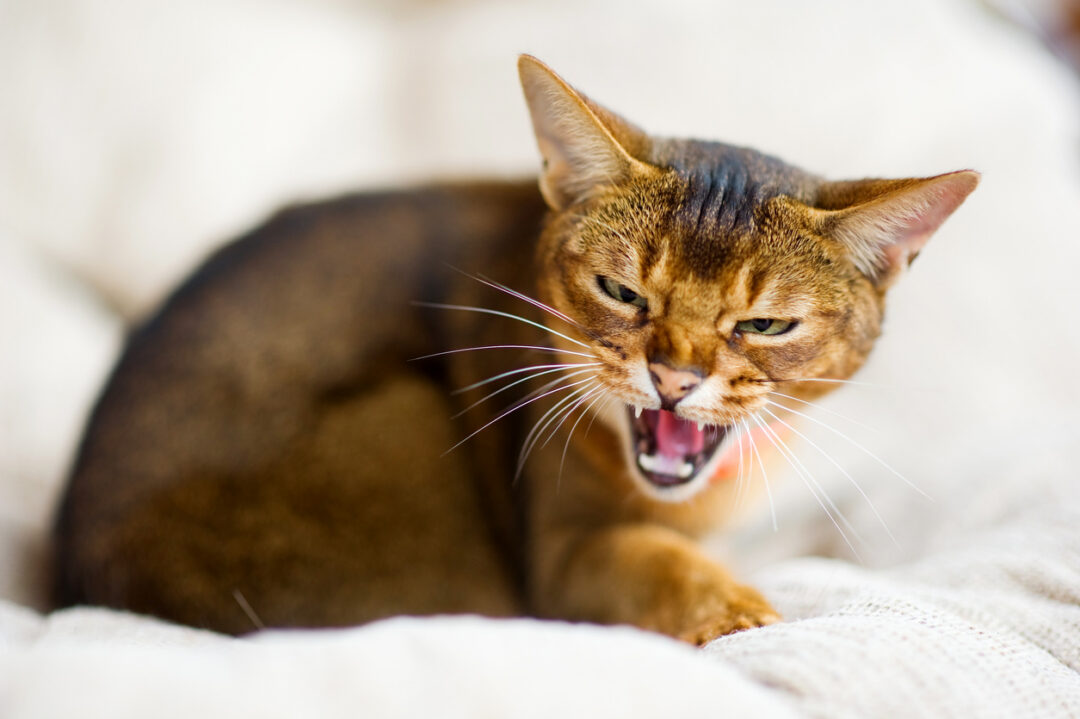
Understanding sudden changes in cat behaviour, the importance of personal space, and why a little patience goes a long way.
One minute, your cat is purring, rubbing against your legs and practically begging for attention. The next, they’re hissing, swatting or acting as though you’ve suddenly become their worst enemy.
What happened?
If you’ve ever experienced this, you’re certainly not alone. Cats have a reputation for being unpredictable, but there’s often more going on than meets the eye.
As a professional cat sitter in Collingwood, I’ve spent a lot of time getting to know cats with very different personalities. Some are outgoing and affectionate from the moment I walk through the door. Others are shy, cautious or particular about how and when they interact.
And some are a little bit of both!
One thing I’ve learned is that a cat who welcomes affection one minute isn’t necessarily comfortable with everything you do the next. Understanding that distinction can make a tremendous difference in how we interact with our feline friends.
Why Do Cats Suddenly Become Aggressive?
First, it’s important to understand that what looks like aggression isn’t always an attempt to attack.
Hissing, growling and swatting are often defensive behaviours. They’re a cat’s way of communicating discomfort, fear or frustration.
Think of it as a warning: “I’m not comfortable with what’s happening right now.”
There are several reasons a normally friendly cat might suddenly react negatively.
1. Too Much of a Good Thing: Overstimulation
Some cats love being petted, but only up to a point.
A cat might happily enjoy having their head scratched for a few minutes before deciding they’ve had enough. If the petting continues, they may nip or swat.
This is sometimes called petting-induced aggression.
The tricky part is that the cat may have been enjoying the attention initially. Their tolerance simply changed.
Watch for subtle warning signs such as a twitching tail, ears turning backward, a tense body or a sudden turn of the head toward your hand.
The solution? Stop petting before the cat feels the need to make the message louder.
2. Fear and Uncertainty
Cats are creatures of habit. They generally appreciate familiar surroundings, predictable routines and the ability to choose when and how they interact with people.
An unfamiliar sound, a sudden movement or even someone approaching from an unexpected direction can make a cat uncomfortable.
This is particularly relevant when someone other than their usual human is caring for them.
Even a cat who knows and likes their cat sitter may occasionally feel uncertain about what’s happening.
3. Redirected Aggression
Sometimes the source of a cat’s frustration has nothing to do with the person standing nearby.
Imagine a cat watching an unfamiliar neighbourhood cat through the window. They become agitated but can’t reach the other animal.
Then their owner walks past, and suddenly there’s a hiss or a swat.
This is called redirected aggression. The cat’s reaction is connected to something else that has upset or frightened them.
4. Pain or Physical Discomfort
Cats are remarkably good at hiding discomfort.
Arthritis, dental problems, injuries and other medical conditions can make a cat less tolerant of touch or movement.
If a normally affectionate cat begins behaving aggressively without an obvious explanation, particularly if the behaviour is new or getting worse, a veterinary checkup is a good idea.
What I Call “Transitions”: When Moving Around Changes Everything
Here’s something I’ve noticed repeatedly in my work as a professional cat sitter, and it’s one of the most useful lessons I’ve learned about handling cats who can be a little unpredictable.
Sometimes the problem isn’t the interaction itself. It’s the transition from one activity or space to another.
Let me explain.
Imagine I’m sitting on the sofa with a cat. Everything is going beautifully.
The cat is purring, rubbing their head against my hand, giving me affectionate little head bonks and clearly enjoying the attention.
We’re getting along famously.
Then I stand up to walk into the kitchen and prepare their dinner.
Suddenly, everything changes.
The same cat who was happily purring a moment ago is now hissing, growling or positioning themselves in my path.
It’s tempting to think, “What on earth? We were just having such a nice time!”
But from the cat’s perspective, the situation has changed.
When I was seated, I was stationary, familiar and predictable. The cat could approach me, move away or decide how much interaction they wanted.
Now I’m standing. I’m taller, I’m moving, and I’m heading toward another part of the house.
For a cat who is particularly sensitive to movement, personal space or changes in their environment, that can be a very different experience.
I call these moments transitions.
It’s not a formal behavioural diagnosis, but it’s a useful way of describing something I encounter when moving between rooms, getting up from a chair, approaching a feeding area or changing activities.
And I’ve learned that how you handle these moments can make all the difference.
The Secret? Let the Cat Set the Pace
When I encounter a cat who becomes uncomfortable during transitions, my approach is surprisingly simple.
I slow down.
If I’m heading into the kitchen and the cat is standing in the doorway looking uncertain, I don’t try to squeeze past them.
I don’t step over them, shoo them away or assume that because we were cuddling two minutes ago, they’ll be perfectly happy with me walking through their space.
Instead, I stop.
I give the cat a little time to assess what’s happening.
Sometimes I’ll speak quietly. Sometimes I’ll simply stand still and wait.
When the cat relaxes and moves out of the way, I can continue.
If they remain tense or begin hissing, I give them more space rather than trying to push through.
The important thing is that I don’t force the transition.
With some cats, this process takes only a few seconds. With others, it requires considerably more patience.
And that’s okay.
Over time, predictable, gentle interactions can help a cat become more comfortable with your movements.
Of course, every cat is different. Waiting patiently isn’t a guarantee that a frightened or highly agitated cat will immediately settle down. Sometimes the safest choice is to back away, allow the cat to retreat and try again later.
But one thing is certain: forcing your way past an uncomfortable cat is unlikely to improve the situation.
Learning to Recognize a Cat’s Warning Signs
Cats communicate a great deal through body language, but their signals can be easy to miss.
Before a cat hisses or swats, you might notice:
- Tail movements: A tail that starts flicking or lashing can indicate rising tension.
- Ear position: Ears turning sideways or flattening backward may signal discomfort.
- Body stiffness: A relaxed cat may suddenly become rigid or crouch.
- Changes in eye expression: Wide eyes or enlarged pupils can accompany fear or heightened arousal.
- Growling or hissing: Clear warnings that the cat wants more space.
It’s important to look at the whole cat and the situation, rather than interpreting one signal in isolation.
And remember, a hiss isn’t a personal insult!
It’s communication.
The cat is telling you something, and the best response is to listen.
Why Patience Matters, Especially When Cat Sitting
When you’re caring for someone else’s cat, you’re entering their home and their territory.
Even if you’ve visited many times before, you’re still not necessarily part of their everyday routine.
That’s one of the reasons I believe patience is such an important part of professional cat sitting.
My job isn’t simply to arrive, fill the food bowls, clean the litter box and leave.
It’s also to understand the individual cat I’m caring for.
Some cats want plenty of affection. Others prefer a respectful distance. Some are perfectly comfortable with me sitting beside them but become anxious when I move around their home.
Recognizing these differences helps me adapt my approach.
It might mean spending an extra minute sitting quietly before getting up. It might mean waiting for a cat to leave a doorway rather than walking directly toward them. Or it might mean giving a nervous cat more room and allowing them to observe me from a comfortable distance.
These may seem like small things, but to a cat who values predictability and control over their surroundings, they can be important.
A Friendly Cat Can Still Have Boundaries
Perhaps the biggest misconception about feline aggression is that a cat must be either friendly or unfriendly.
In reality, cats are much more complicated than that.
A cat can be affectionate, social and genuinely pleased to see you while still being sensitive to sudden movements, unfamiliar situations or changes in routine.
One pleasant interaction doesn’t automatically mean they’re comfortable with every interaction that follows.
And a hiss doesn’t erase all the affection that came before it.
Sometimes, the best way to build trust with a cat is to recognize when they need a little space.
Patience isn’t just about waiting for a cat to come to you. Sometimes it’s about waiting until they’re comfortable letting you move.
That’s a lesson I’ve learned through experience, and it’s one I carry with me into every cat-sitting visit.
In-Home Cat Sitting in Collingwood, Ontario
At Collingwood Cat Sitting, I provide personalized, in-home care that allows cats to remain in the comfort of their familiar surroundings while their people are away.
Every cat has their own personality, routines and boundaries. I take the time to get to know them and adapt my visits to their individual needs.
I also offer a free meet and greet in your home, so we can discuss your cat’s personality, preferences and any behaviours I should know about before your trip.
Learn more at CollingwoodCatSitting.ca.